Luxor Day Tour
Valley of the Kings in Luxor: Discover the tombs of the pharaohs of Egypt
The Valley of the Kings in Luxor is one of Egypt’s most impressive archaeological sites and a must-see for any traveler interested in the history of ancient Egypt. Located on the west bank of the Nile River, opposite the city of Luxor, this stunning valley was used as a royal necropolis during Egypt’s New Kingdom.
Numerous pharaohs were buried here, including some of the most famous rulers in Egyptian history. Their tombs, carved into the desert mountains, preserve paintings, reliefs, hieroglyphs, and religious scenes that offer insight into the ancient Egyptians’ beliefs about death and the afterlife.
If you’re planning a trip to Luxor, visiting the Valley of the Kings is an experience that shouldn’t be missing from your itinerary.
Where is the Valley of the Kings located?
The Valley of the Kings is located on the west bank of the Nile, in the present-day city of Luxor, approximately a few kilometers from the famous temples of Karnak and Luxor.
Ancient Thebes, now known as Luxor, was one of the most important cities in ancient Egypt and served as the capital during various periods. The necropolis on the west bank formed part of the ancient city’s religious and funerary landscape.
The Valley of the Kings is part of the archaeological complex of ancient Thebes and its necropolis, declared a UNESCO World Heritage Site in 1979.
Why were the tombs built in the Valley of the Kings?
During the New Kingdom, the pharaohs gradually abandoned the tradition of building great pyramids as royal tombs and began to excavate their graves in the mountains on the west bank of Thebes.
The choice of location was not accidental.
For the ancient Egyptians, the west was associated with the underworld because the sun disappeared below the western horizon each evening. For this reason, many necropolises and funerary monuments were built on the west bank of the Nile.
Furthermore, the valley offered a secluded location protected by the mountains. The pharaohs sought to keep their tombs hidden and protected from looters.
Egypt’s Ministry of Tourism and Antiquities notes that the valley contains more than 60 tombs, in addition to numerous unfinished tombs.
The tombs of the Valley of the Kings
One of the great surprises for those who visit the Valley of the Kings is that the tombs are not all the same.
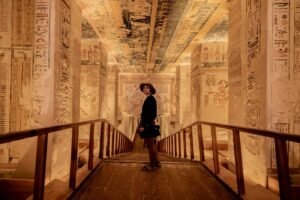
Some are relatively small, while others feature long corridors, staircases, burial chambers, and elaborate decorations.
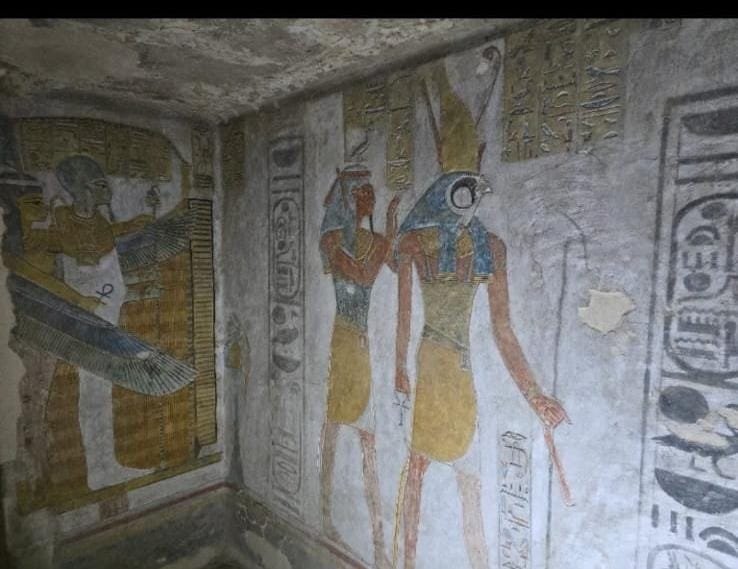
The walls are covered with religious texts, hieroglyphs, and depictions of gods, pharaohs, and scenes related to the deceased’s journey to the afterlife.
These images were not merely decorative. They were part of a complex religious system designed to help the pharaoh achieve eternal life.
Luxor’s dry climate has also helped preserve many of these paintings for thousands of years.
The tomb of Tutankhamun: KV62
Tutankhamun’s tomb is probably the most famous in the entire Valley of the Kings.
It was discovered in 1922 by British archaeologist Howard Carter, and its discovery became one of the most important archaeological events of the 20th century.
The tomb, identified as KV62, stood out because it was found with an extraordinary amount of funerary objects and treasures, many of them made of gold.
Interestingly, Tutankhamun’s tomb is relatively small compared to the large tombs of other pharaohs. This is likely related to the young age at which Tutankhamun ascended the throne and his relatively short reign.
Visiting the tomb allows you to closely observe some of the original decoration and better understand the importance of this young pharaoh in the modern history of Egyptology.
What other pharaohs were buried here?
The Valley of the Kings was used primarily during the 18th, 19th, and 20th dynasties.
Among the pharaohs associated with the valley are important rulers of the New Kingdom, such as:
Thutmose I
Tuthmosis III
Amenhotep II
Amenhotep III
Seti I
Ramesses II
Ramesses III
Ramesses IV
Ramesses VI
Ramesses IX
Tutankhamun
Not all tombs are open to the public at the same time, and access conditions may change due to conservation and protection work.
Therefore, it is advisable to check the current conditions before making the visit.
The paintings and hieroglyphs in the tombs
One of the most fascinating aspects of the Valley of the Kings is its mural paintings.
Inside the tombs, one can find scenes related to different funerary books and to the pharaoh’s journey through the world of the dead.
Gods such as Osiris, Anubis, Ra and Hathor appear, in addition to representations of the pharaoh and different symbols related to regeneration and eternal life.
The colors used by ancient Egyptian artists can still amaze visitors with their intensity and detail.
Therefore, entering a tomb in the Valley of the Kings is not simply visiting an archaeological monument: it is entering a religious space created more than three thousand years ago.
How long does it take to visit the Valley of the Kings?
To enjoy the visit at a leisurely pace, it is usually recommended to set aside around 2 to 3 hours, depending on the number of tombs you wish to visit and the access conditions.
The experience can easily be combined with other major sites on Luxor’s west bank, such as:
Temple of Hatshepsut at Deir el-Bahari
Colossi of Memnon
Valley of the Queens
Deir el-Medina
Tombs of the Nobles
In this way, you can organize a complete excursion along the west bank of Luxor and learn about different aspects of Egyptian civilization in a single day.
What is the best way to visit the Valley of the Kings?
One of the best options is to take the tour accompanied by an Egyptologist guide, especially if you want to understand the meaning of the scenes, the gods, and the texts that appear inside the tombs.
A guided tour also allows you to discover details that usually go unnoticed by those who explore the place on their own.
For travelers with limited time, a private tour to the Valley of the Kings from Luxor also offers the possibility of organizing the tour according to their schedules and combining several monuments on the west bank.
Tips for visiting the Valley of the Kings
Before visiting the valley, it is advisable to keep in mind some tips:
Bring water: Luxor has a very warm climate for much of the year.
Wear comfortable shoes: you will have to walk through areas of uneven terrain and go up and down stairs inside some tombs.
Visit early: the first hours of the day are usually more pleasant due to the temperatures.
Check which tombs are open: access may vary depending on conservation work and decisions by the authorities.
Consider hiring a guide: the paintings and funerary texts have religious and historical meanings that can be difficult to interpret without explanation.
Egypt’s own official tourist materials recommend checking which tombs are open, as some may be under restoration or have limited access.
Valley of the Kings and other monuments of Luxor
One of the great advantages of visiting Luxor is the possibility of seeing several extraordinary monuments in a single excursion.
On the west bank you can combine the Valley of the Kings with the Temple of Hatshepsut, the Colossi of Memnon and other sites of the Theban necropolis.
On the eastern bank are the Temple of Karnak and the Temple of Luxor, two of the most important monuments of ancient Thebes.
The combination of both banks helps to understand why Luxor is considered one of Egypt’s main archaeological destinations.
Book your tour to the Valley of the Kings in Luxor
Do you want to discover the tombs of the pharaohs and learn about the history of ancient Egypt accompanied by a specialized guide?
You can book a day trip to the Valley of the Kings from Luxor and combine the visit with other monuments on the west bank to make the most of your stay.
A private tour allows you to tailor the route to your interests, choose the places you want to visit, and enjoy a more personalized experience.
Discover the Valley of the Kings and walk through the same place where, more than 3,000 years ago, the pharaohs of the New Kingdom prepared their journey to eternity.
Frequently Asked Questions about the Valley of the Kings
Where is the Valley of the Kings?
It is located on the west bank of the Nile River, in Luxor, Egypt.
How many tombs are there in the Valley of the Kings?
The valley has more than 60 tombs, in addition to several unfinished tombs.
Is Tutankhamun’s tomb open?
Tomb accessibility may change. It is recommended to check access conditions before visiting.
How long does a visit to the Valley of the Kings last?
A visit usually lasts approximately 2 to 3 hours, depending on the tombs visited.
Can you visit the Valley of the Kings from a Nile cruise?
Yes. The valley can easily be included in the itineraries of Nile cruises that stop in Luxor.
Is it worth hiring a guide?
Yes. A knowledgeable guide can explain the meaning of the paintings, hieroglyphs, and funerary beliefs of ancient Egypt, making the visit much more interesting.